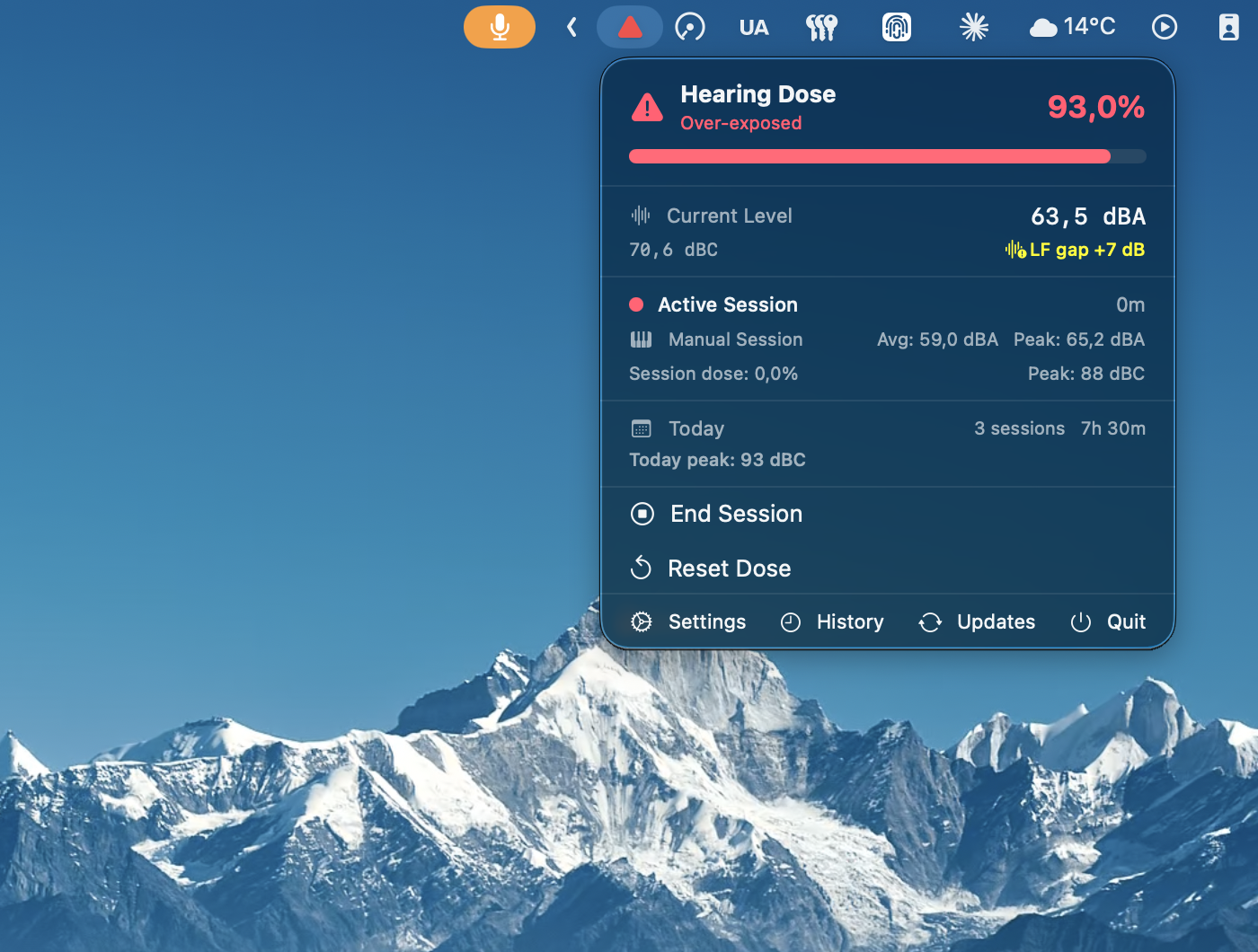
Hearing dose
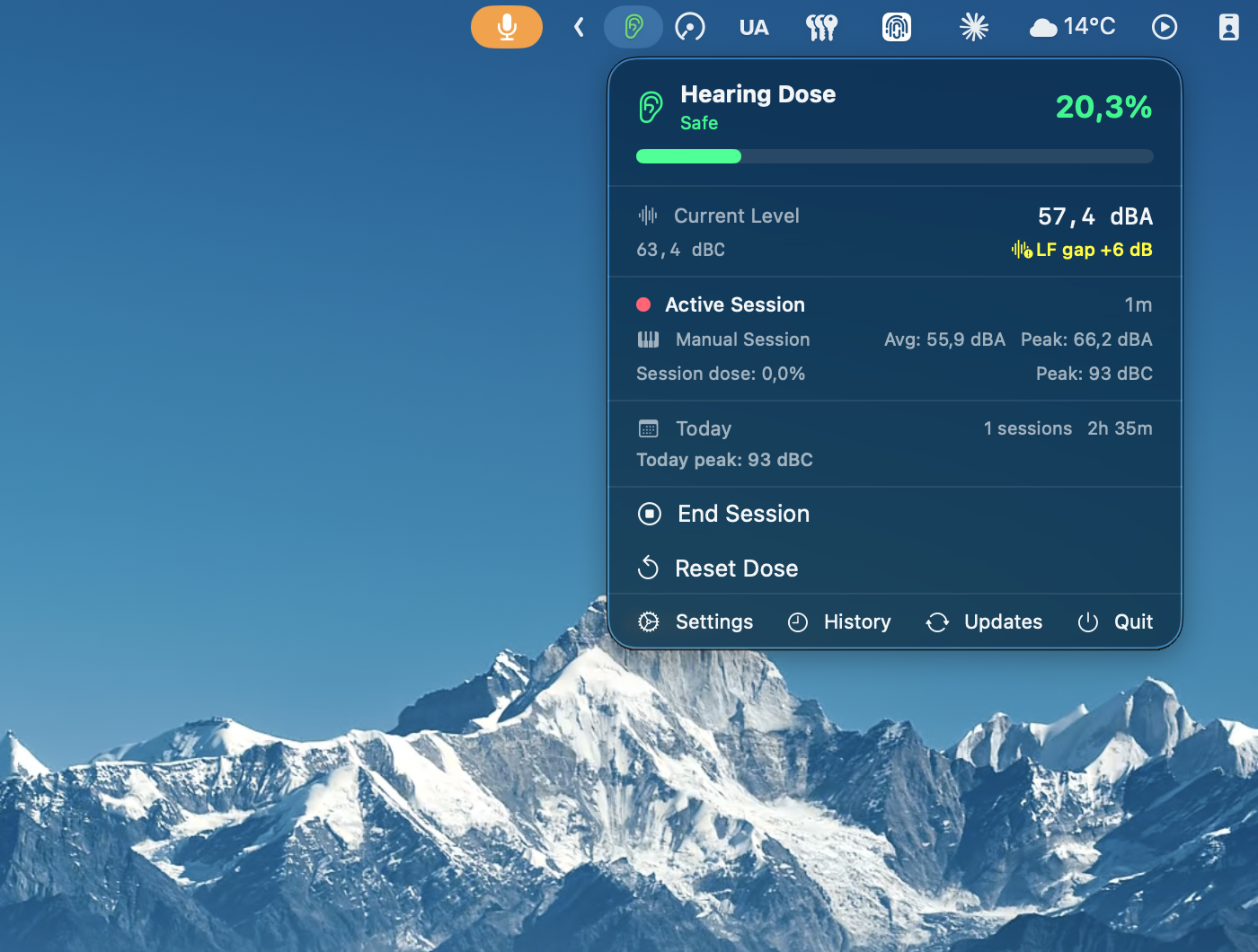
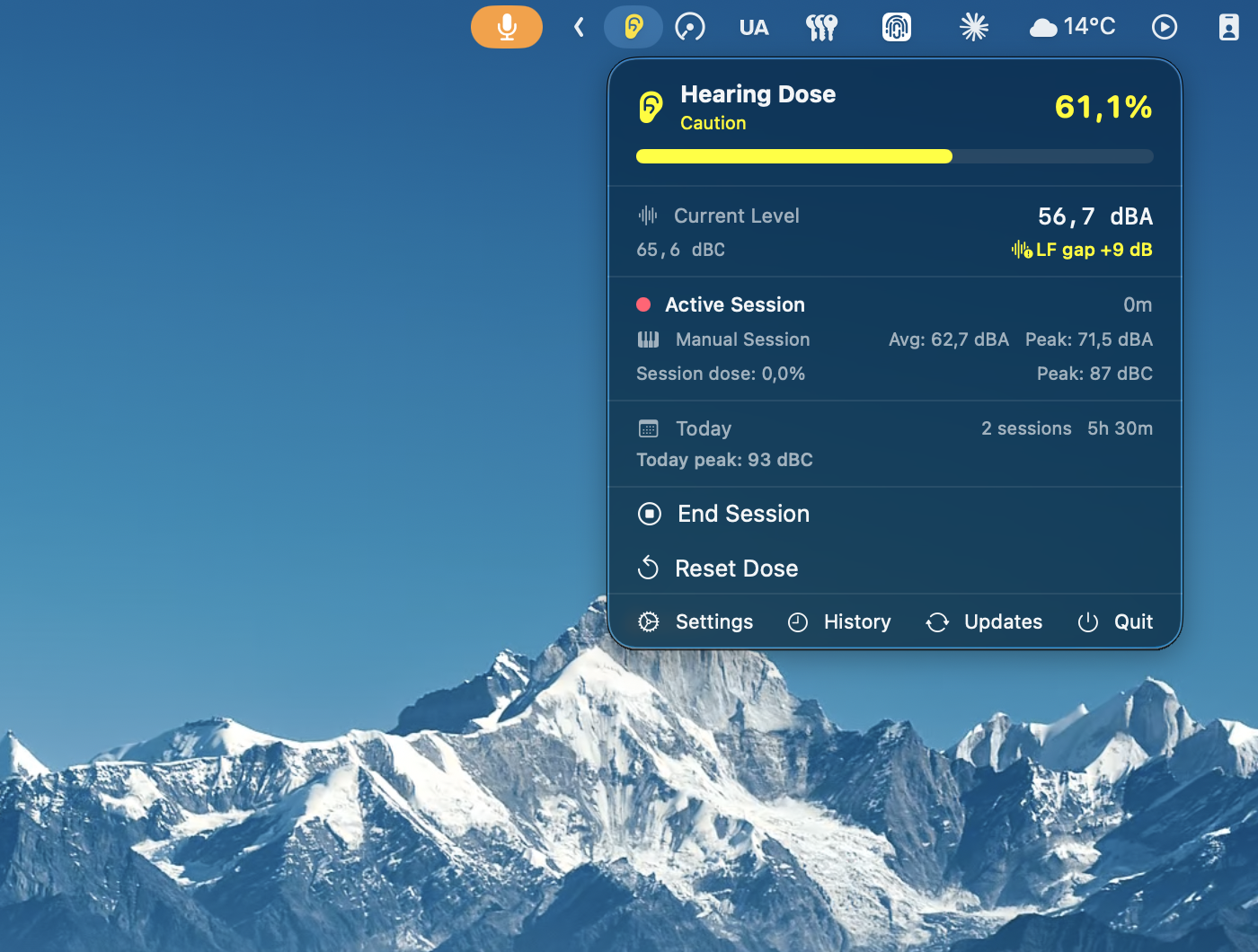
Accumulates your daily exposure using the NIOSH formula. Four colour-coded states — Safe, Caution, Warning, Danger — update in the menu bar icon in real time. Resets at midnight. Persists across restarts.
Real-time SPL
Continuous A-weighted level at 10 Hz, exponentially smoothed for a stable, readable display. Calibratable to your measurement mic for real-world accuracy.
Leq & Ln stats
Rolling energy-average level (Leq) over 1-, 10-, and 30-minute windows shows how loud you have actually been — not just right now. L10, L50, and L90 percentiles reveal the character of a session: L10 captures your loud peaks, L50 your typical working level, L90 the background noise floor. All computed live in the menu bar.
Peak monitoring
C-weighted peak impulse tracking per EU Directive 2003/10/EC. Notifies you when levels cross the 135, 137, or 140 dBC action values. Per-session and daily peak counts recorded.
Session tracking
Auto-detects when you open a DAW and starts a session. 15 DAWs supported out of the box — Luna, Logic, Pro Tools, Ableton, REAPER, and more. Manual start and end also available.
Session history
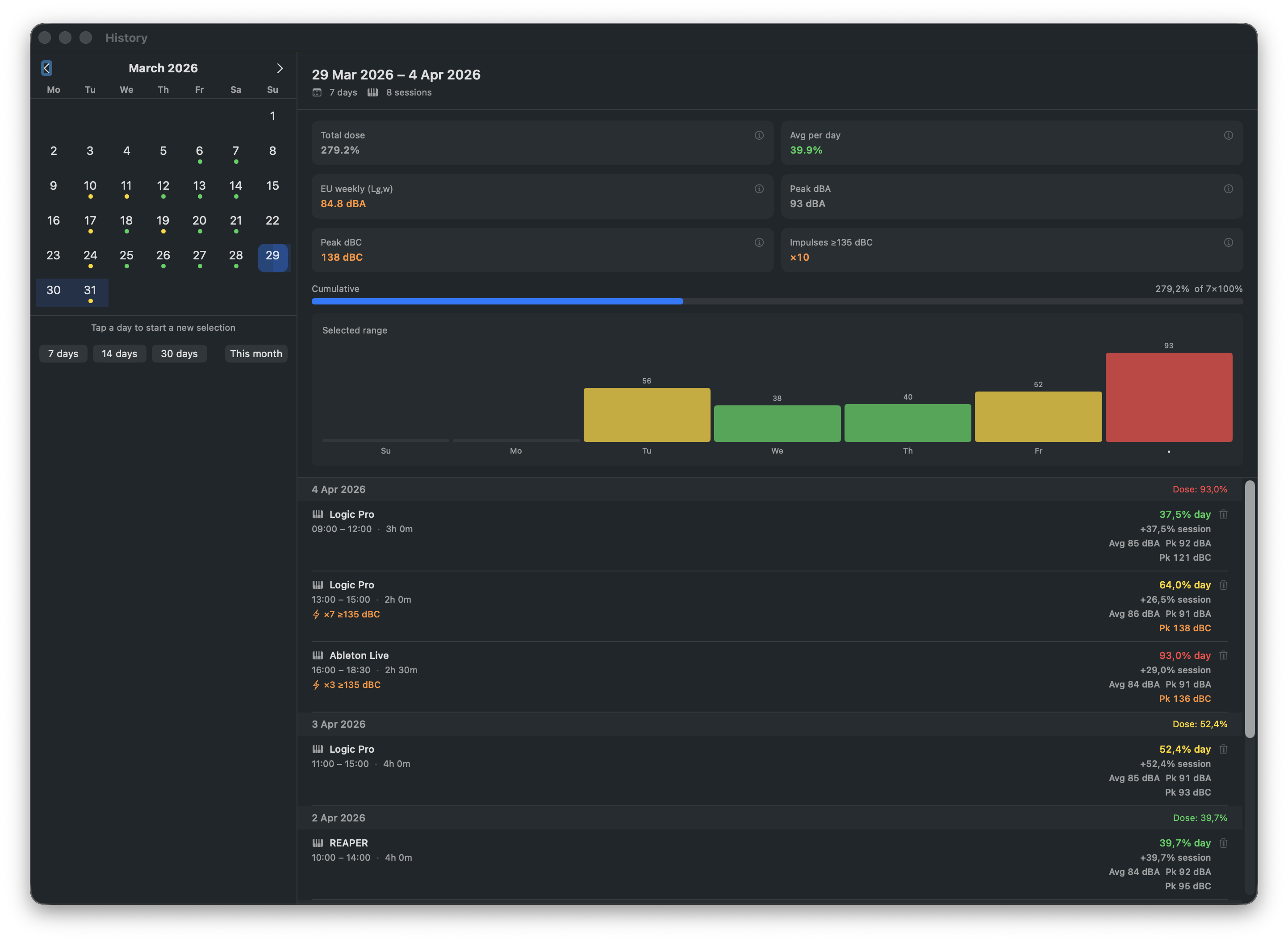
Full 30-day history with per-session dose contribution, average and peak SPL, and peak impulse counts. Seven-day bar chart shows your weekly EU L_EX,w exposure level at a glance.
History window
Dedicated calendar window for exploring any date range in your 30-day archive. Select a range on the calendar to see cumulative dose, daily average, EU weekly level (L_EX,w), peak dBA, peak dBC, and impulse counts — all in one view. Each stat includes an explanation popover with thresholds and regulatory context.
Instantaneous peaks
Tracks A-weighted instantaneous peaks above 115 dBA — the EU Directive 2003/10/EC ceiling for any single moment of exposure. Counts per session, separate from the C-weighted impulse limits.
Conservative mode
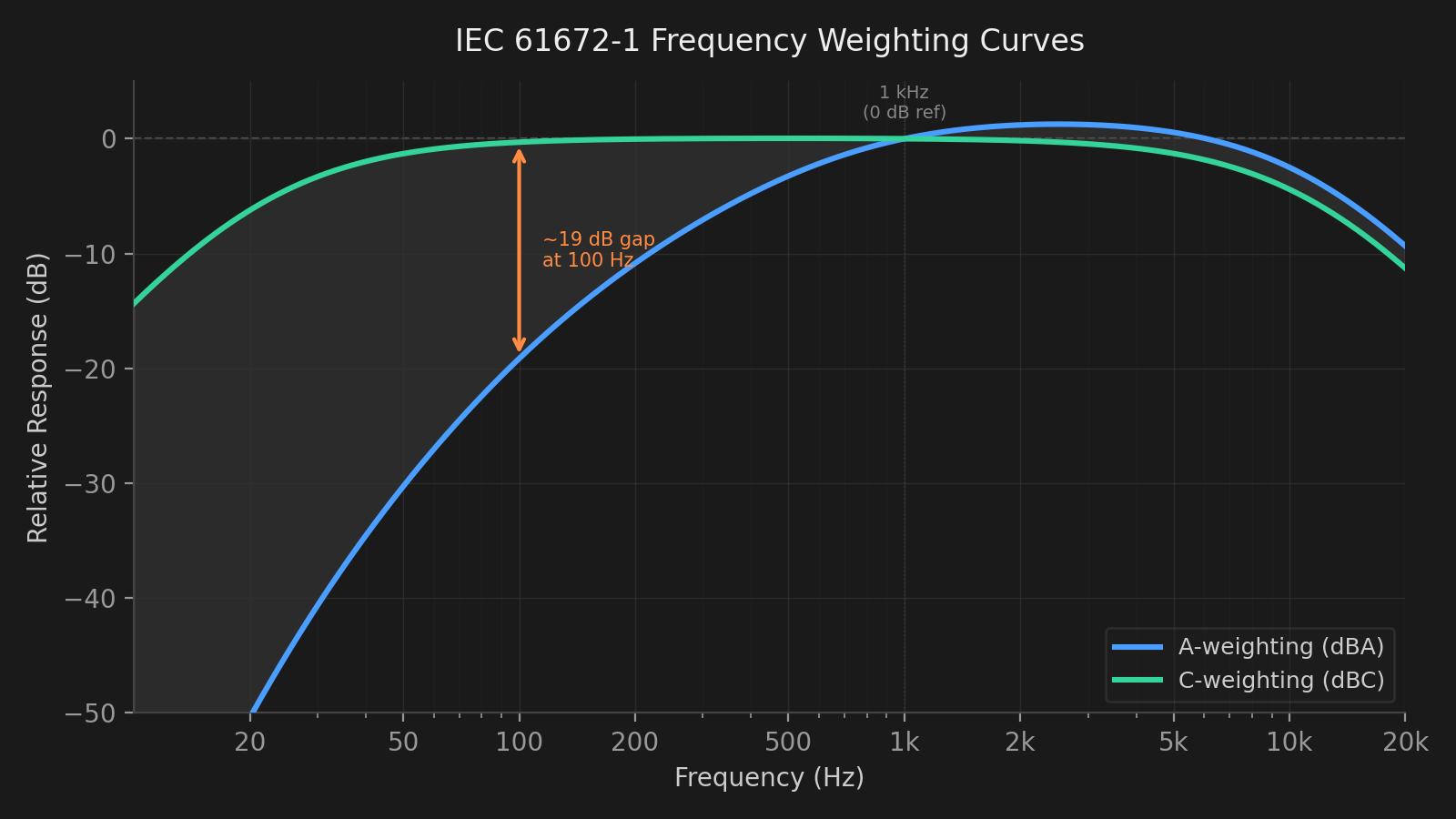
Optional setting that uses max(dBA, dBC) for dose accumulation. Designed for bass-heavy work — sub-mixing, kick drum tracking, live sound — where A-weighting alone may underreport physical energy. No formal standard; a maximum-protection option you can enable in Settings.
Input channel selection
Pick any individual input channel from your audio interface — not just the default stereo pair. Useful for measuring via a talkback mic, a dedicated measurement input, or any other channel on multi-channel interfaces like the Apollo Twin X. Channel names are read directly from the driver.
Non-invasive
Lives in the menu bar with no Dock icon. Measures passively via any CoreAudio input device — a built-in mic, a measurement mic, or any interface input channel. Nothing touches your signal chain.
Auto-updates
Stays current automatically. You'll be notified in the menu when a new version is available.
Launch at login
Optionally start with macOS so dose tracking begins as soon as your session does.